Imagine folding a piece of paper in half, punching a hole through it, and then trying to picture exactly where the holes appear when it's unfolded. Simple to do with real paper. Surprisingly difficult to do entirely in your head. That's the challenge at the heart of CogAT Paper Folding questions — and at Grade 7, the difficulty is real.
How CogAT Paper Folding Questions Work
Each question shows a sequence of images. The first image is a square piece of paper. Subsequent images show the paper being folded one or more times, followed by a hole being punched through the folded layers. Students must then select which answer choice correctly shows where all the holes appear when the paper is fully unfolded.
There are no words to decode, no equations to solve. The entire task happens in the student's mind — making it a direct measure of spatial visualization ability.
Why Grade 7 Students Find This Challenging
The difficulty at Grade 7 comes from two compounding factors. First, the paper may be folded more than once, meaning students must mentally track multiple fold lines simultaneously. Second, each fold doubles the number of layers, which means a single punched hole can produce two, four, or even more holes once unfolded — and their positions must be mentally mirrored across each fold line precisely.
Students who rush, or who only track the most recent fold, almost always arrive at the wrong answer.
CogAT Nonverbal Battery Grade 7: A Step-by-Step Mental Strategy
The most reliable approach is to work backwards through the folds rather than forwards. Starting from the punched hole and mentally "unfolding" one step at a time produces a clearer, more accurate picture than trying to follow the paper forward through every fold.
Students should also practice anchoring the fold line visually — treating it as a mirror — and reflecting the hole's position across that line with each step. This single habit dramatically reduces errors.
At home, parents can reinforce this with actual paper and a pencil. Physically folding, punching, and unfolding several times builds the mental model students need to visualize the process without props on test day.
We’ve included a Grade 7 CogAT paper folding practice set below to help students experience the format and difficulty level of the actual CogAT exam.
For more such CogAT nonverbal battery grade 7 practice questions, click here.
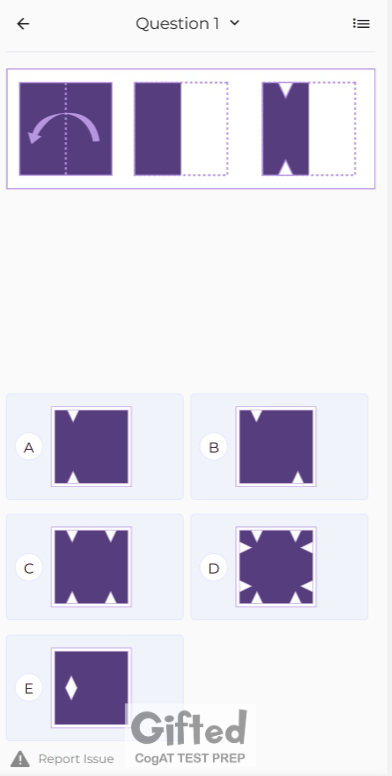
Q1.
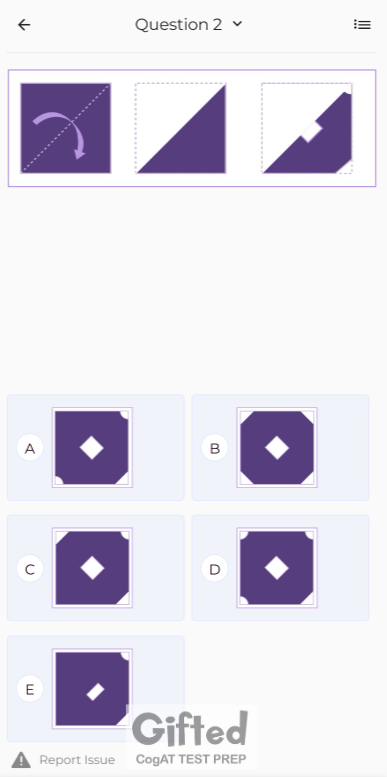
Q2.
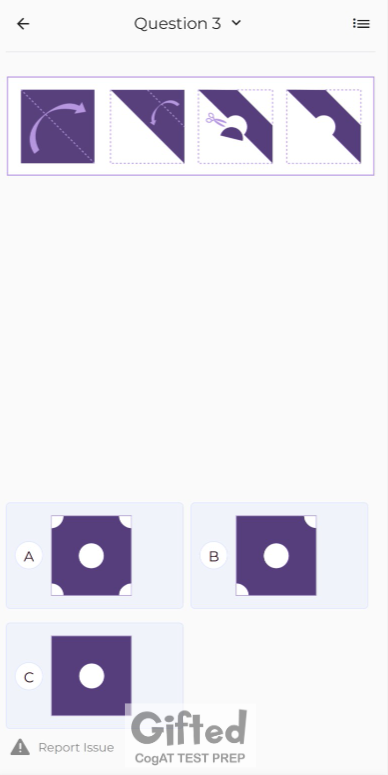
Q3.
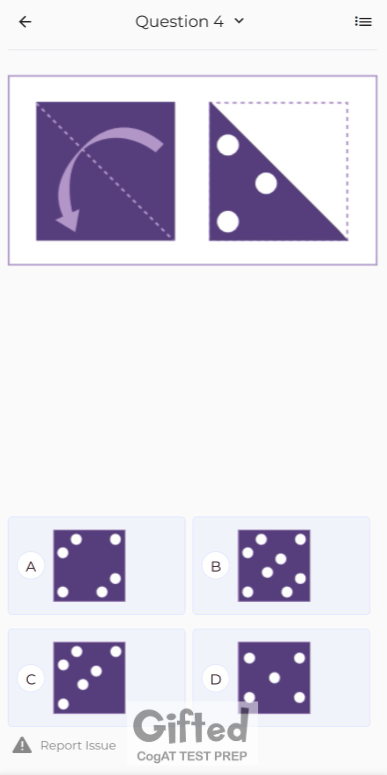
Q4.
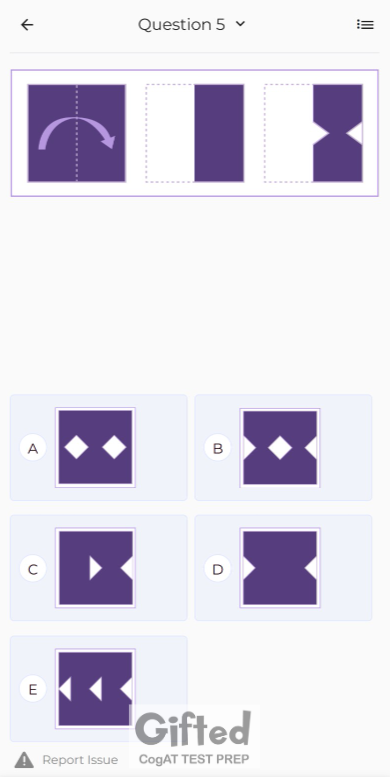
Q5.
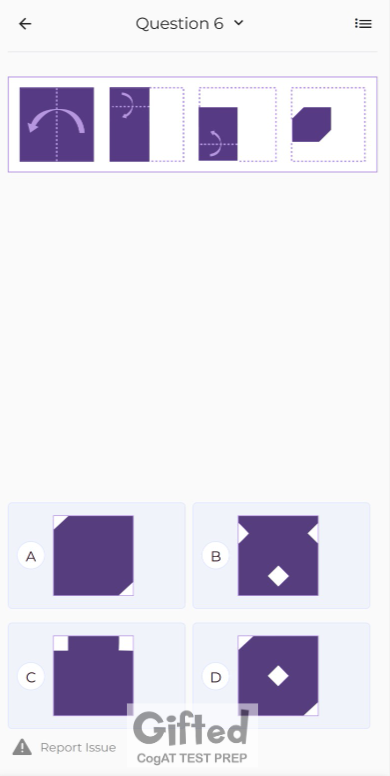
Q6.
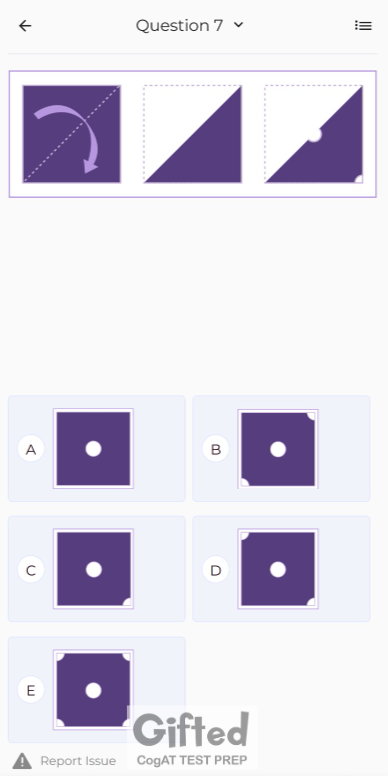
Q7.
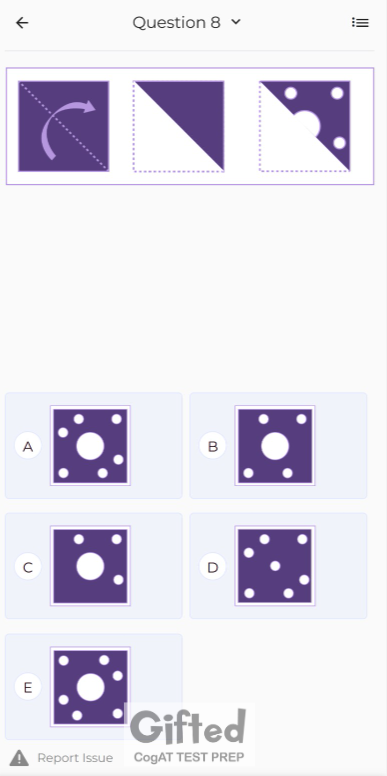
Q8.
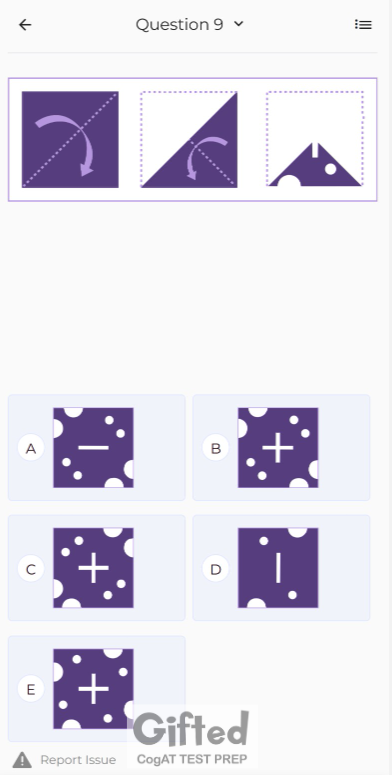
Q9.
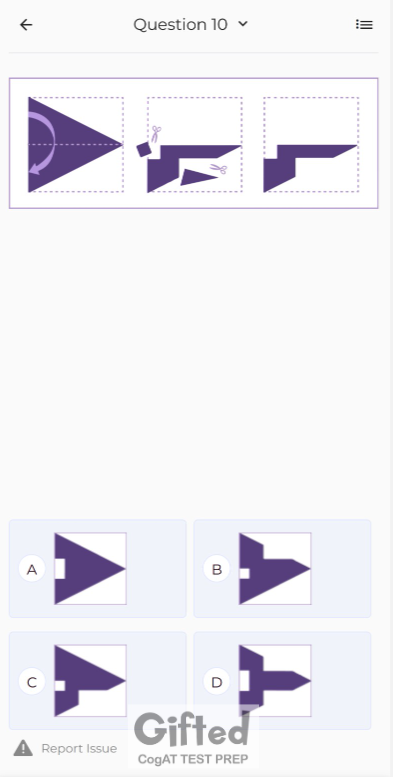
Q10.
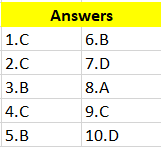
For detailed explanations and solving strategies, click here.
Turn Spatial Weakness Into Strength
CogAT paper folding is one of those question types where targeted practice produces rapid improvement. Gifted Prep App's CogAT nonverbal battery grade 7 section includes dedicated Paper Folding practice with visual explanations that walk students through each fold — step by step — until the reasoning becomes second nature.