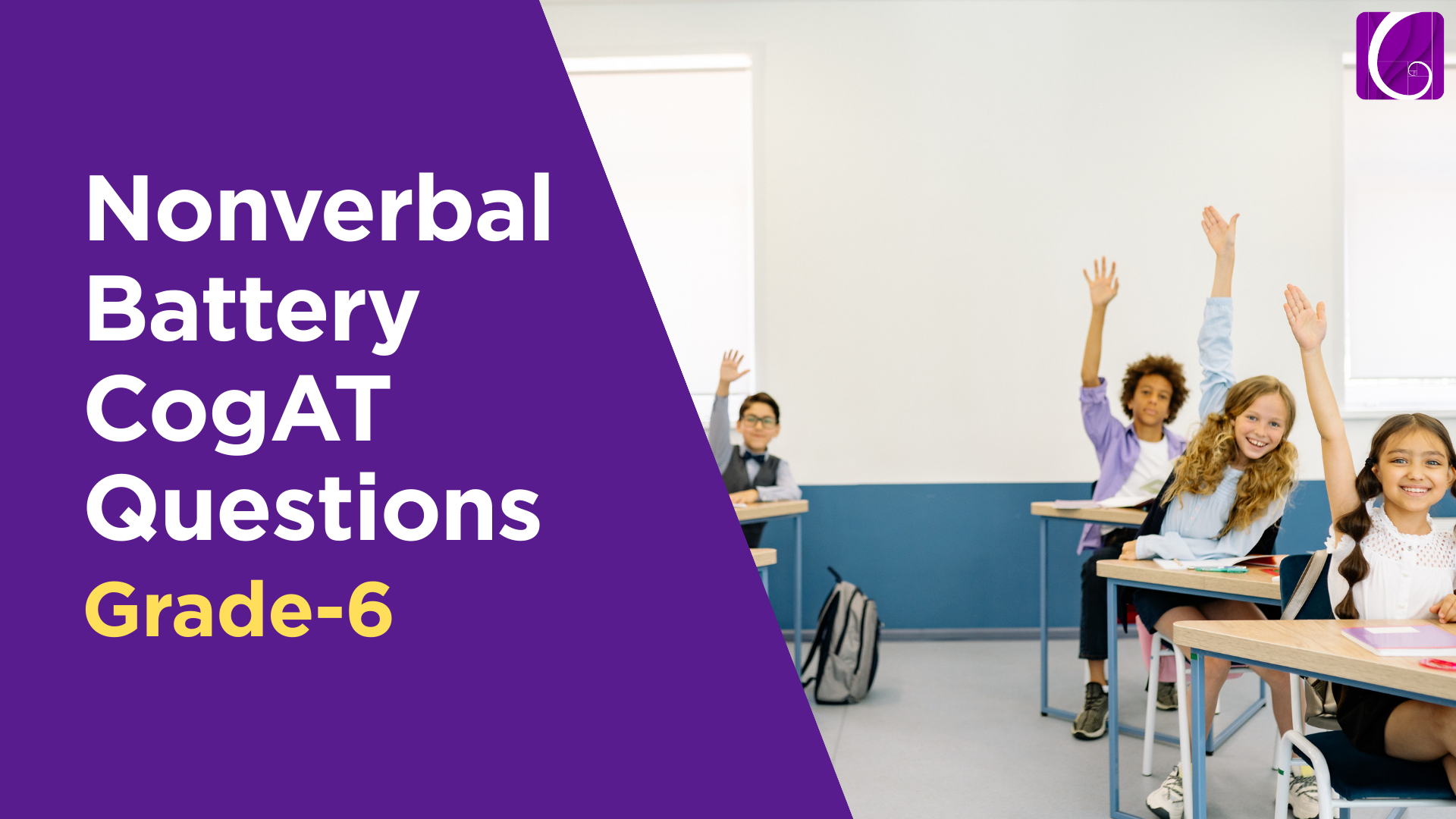
Walk into any Grade 6 classroom around the world—Tokyo, Toronto, or Texas—and hand students the CogAT Nonverbal Battery. No one needs instructions translated. No one asks what the words mean. Because there are no words.
Just shapes. Patterns. Visual puzzles that speak a universal language.
That's precisely why the Nonverbal Battery exists. It measures intelligence without the interference of language proficiency, reading level, or cultural context. It asks: Can you see relationships? Can you predict what comes next? Can you solve problems using only your eyes and your brain?
For Grade 6 students, this section often feels like walking into an escape room. Everything you need is visible—you just have to figure out how the pieces connect.
Three Puzzles, Three Ways of Thinking
The CogAT Nonverbal Battery isn't a single challenge—it's three distinct cognitive tests wrapped into one section.
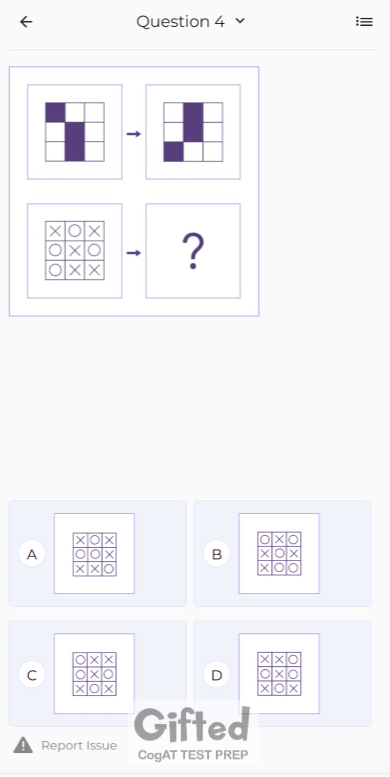
Figure Matrices present incomplete grids where shapes transform across rows and columns. Your task? Determine which piece completes the pattern. It's like visual algebra: if this shape becomes that when moving right, what happens when you move down?
Figure Classification gives you three shapes that share a hidden rule, then asks you to identify which answer choice belongs to the same family. The rule could be anything—number of sides, symmetry, internal patterns, or relationships between elements.
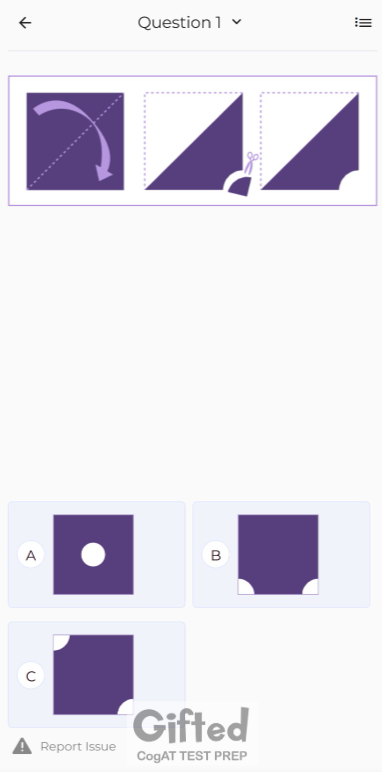
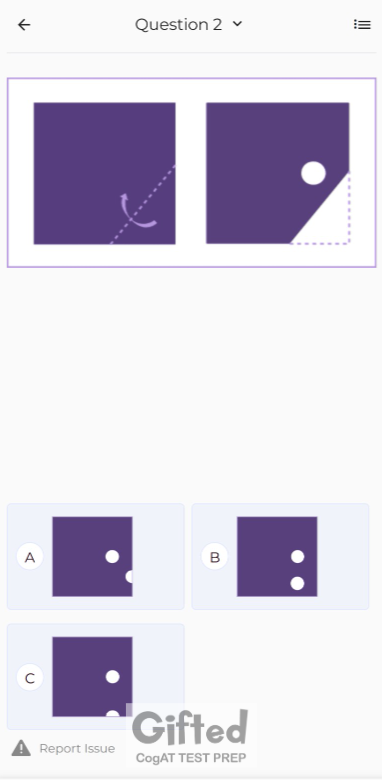
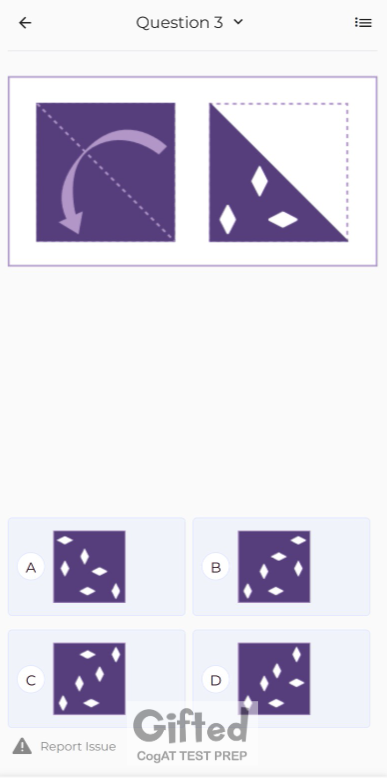
Paper Folding tests mental visualization. You see a square folded multiple times, then punched with holes. When you unfold it in your mind, where do all the holes appear?
Each question type requires different mental muscles. Success means switching between pattern recognition, classification logic, and spatial reasoning—often within minutes.
Where Students Get Stuck
The biggest mistake? Assuming visual questions are easier than verbal or quantitative ones. Students glance, guess, and move on—never testing whether their "obvious" answer actually follows the rule.
Another trap: fixating on a single visual feature. They notice all the shapes are circles and miss that the real pattern involves how many circles or where they're positioned.
The Nonverbal Battery punishes assumptions. It rewards students who stay curious, who question their first impression, who verify before selecting.
Building Your Visual Reasoning Toolkit
Improvement starts with understanding that nonverbal reasoning isn't innate—it's learnable. The more patterns you encounter, the faster you recognize them. The more transformations you study, the easier it becomes to predict the next step.
Effective practice means working through questions slowly at first, articulating why each answer is right or wrong. Speed develops naturally once your brain internalizes common pattern types.
For more CogAT Grade 6 Nonverbal Battery practice questions, click here.
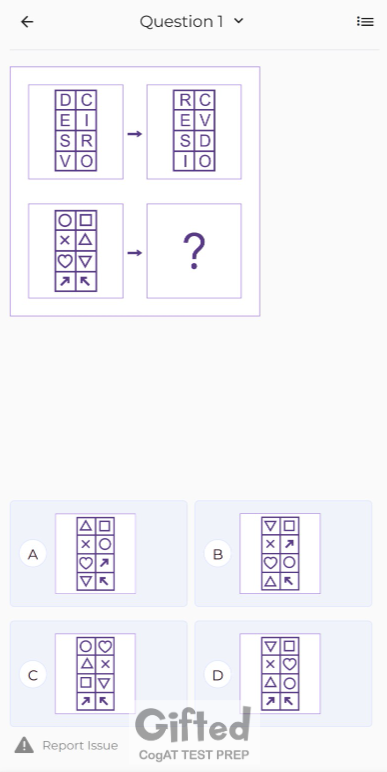
Q1.
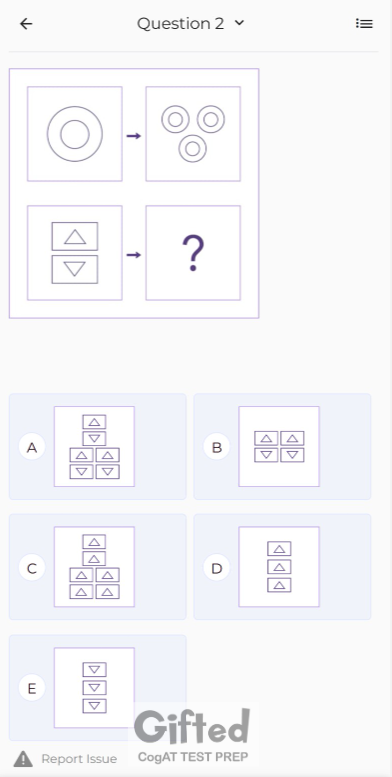
Q2.
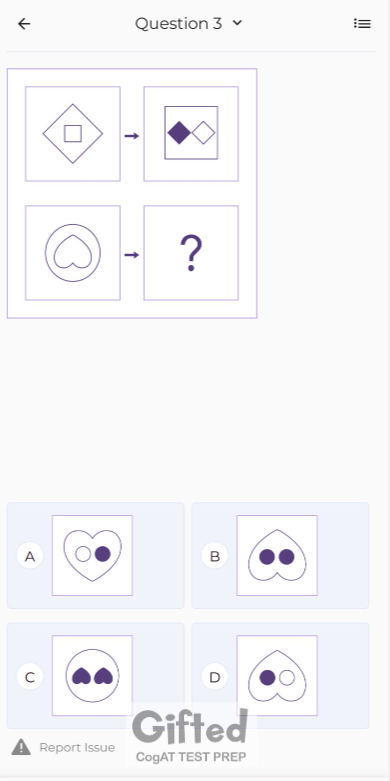
Q3.
Q4.
Q5.
Q6.
Q7.
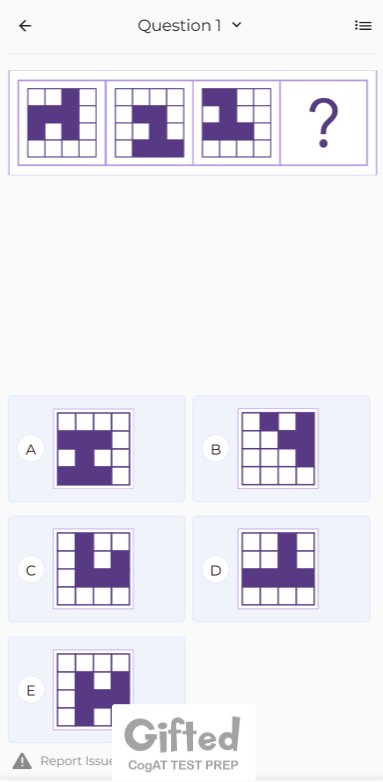
Q8.
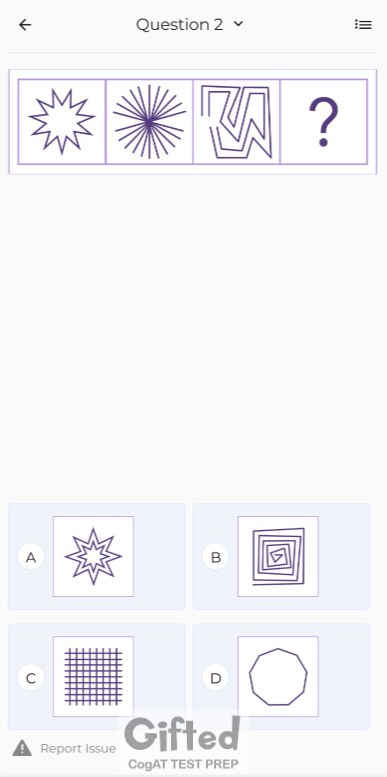
Q9.
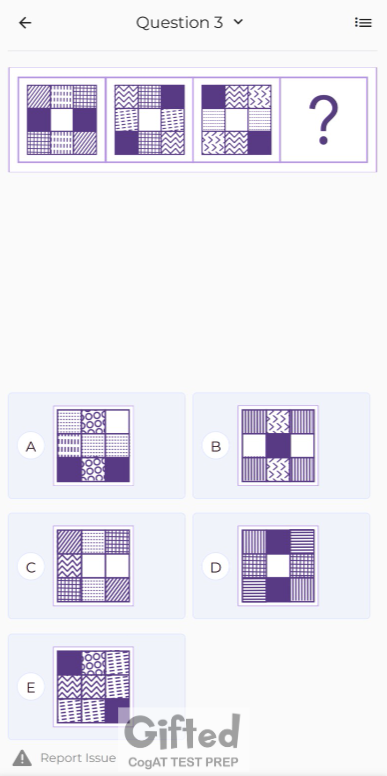
Q10.
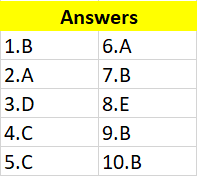
For detailed explanations and solving strategies, click here.
The Gifted Prep App provides complete Nonverbal Battery preparation for Grade 6, with questions organized by exam pattern and difficulty, plus visual breakdowns that teach you to see patterns the way top scorers do.